
SSDs
Solid State Drives (SSDs) have become increasingly popular for use in surveillance systems due to their reliability, speed, and durability. Compared to traditional hard disk drives (HDDs), SSDs have no moving parts, making them less prone to mechanical failures and more resistant to physical shocks, which is particularly useful for surveillance systems that need to operate 24/7. SSDs also have faster access times, which means that video footage can be recorded and retrieved more quickly, enabling faster response times in case of incidents.Additionally, SSDs consume less power than HDDs, which can help reduce energy costs for larger surveillance systems.
Another advantage of using SSDs in surveillance systems is their ability to handle large amounts of data. Modern surveillance cameras can capture high-resolution video at high frame rates, which can result in large file sizes. SSDs are capable of handling this data load without slowing down, ensuring that video footage is recorded and stored efficiently. Moreover, SSDs offer better data transfer rates, which means that video footage can be transferred to a centralized storage location more quickly and efficiently, allowing for faster video retrieval and analysis.

SSDs
Solid State Drives (SSDs) have become increasingly popular for use in surveillance systems due to their reliability, speed, and durability. Compared to traditional hard disk drives (HDDs), SSDs have no moving parts, making them less prone to mechanical failures and more resistant to physical shocks, which is particularly useful for surveillance systems that need to operate 24/7. SSDs also have faster access times, which means that video footage can be recorded and retrieved more quickly, enabling faster response times in case of incidents.Additionally, SSDs consume less power than HDDs, which can help reduce energy costs for larger surveillance systems.
Another advantage of using SSDs in surveillance systems is their ability to handle large amounts of data. Modern surveillance cameras can capture high-resolution video at high frame rates, which can result in large file sizes. SSDs are capable of handling this data load without slowing down, ensuring that video footage is recorded and stored efficiently. Moreover, SSDs offer better data transfer rates, which means that video footage can be transferred to a centralized storage location more quickly and efficiently, allowing for faster video retrieval and analysis.
SSD
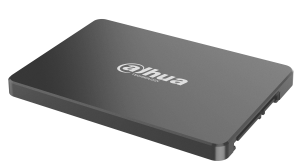
2.5" SATA Solid State Drive (120GB)
View Product